This article was originally published in ERR Culture on 17 September 2026.
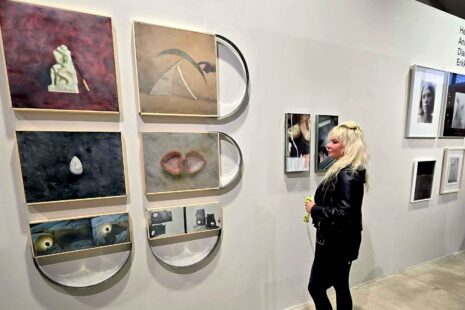
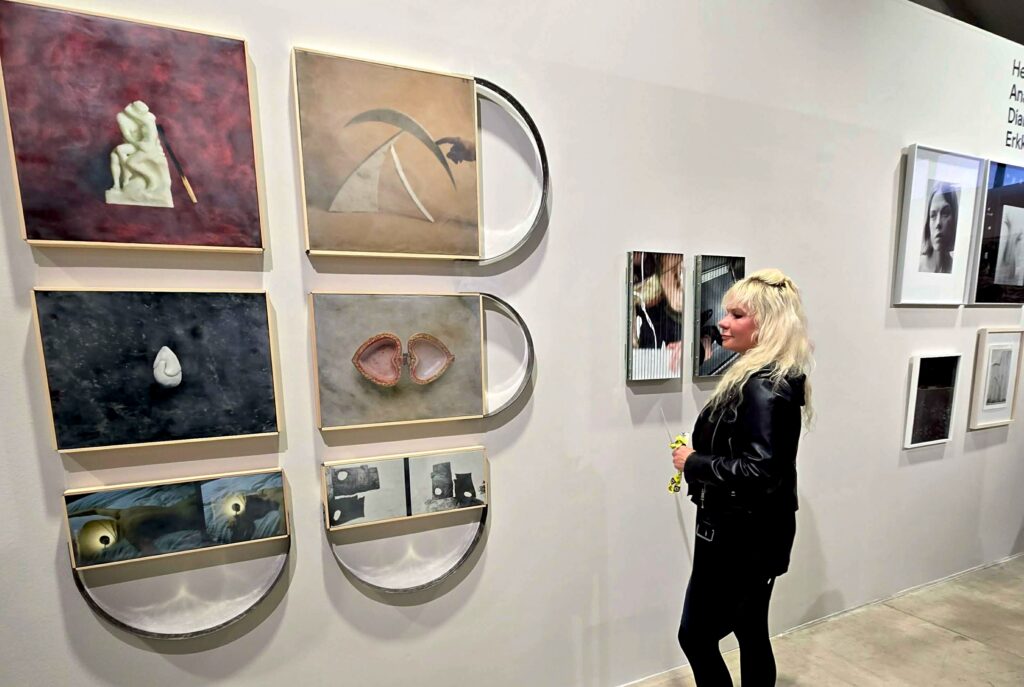
At the Foto Tallinn fair, running 18–20 September, audiences will encounter 30 artists through 16 galleries. The gallery selection is strong, bringing together key figures in Nordic and Baltic contemporary art and photography. Alongside the galleries’ presentations are 15 artists selected by an international jury through an open call — a curated cross-section of what an international jury currently considers relevant in photo-based art. The fair’s public programme is closely tied to collecting, curator-led tours, and the fair format itself, but far more interesting material opens up through the work of the photographic artists themselves. The questions that recur across different artists’ practices make it possible to see what broader shifts are currently taking place in photographic art.
The focus has long since shifted away from being solely on what photography depicts, but increasingly on how an image comes into being, in what form it exists, how we look at it, and what role remains for the photographer in an era when images can be produced practically without limit.
Photography’s Changing Relationship to Reality
In international photographic art, the question of the photographic image’s relationship to reality remains acutely present. This is not, in itself, a new problem — photography has never been a neutral copy of reality — but under conditions of digital manipulation, algorithmic image processing, and generative artificial intelligence, the scope of the question has changed. It is no longer possible, simply by looking at an image, to distinguish whether one is looking at a documented event, a staged scene, a manipulated photograph, or a synthetically generated picture. Photography’s historical authority as witness to the visible world has not disappeared, but it can no longer be taken for granted. The works by the artists exhibiting at Foto Tallinn offer several different responses to this tension.
At the same time, Antti J. Leinonen’s Pyynti demonstrates photography’s continuing power as witness to reality and as a carrier of historical memory. Leinonen works at the boundary of documentary photography and fine art, and his long-term series follows a community of fishermen in northern Finland and a way of life that is becoming ever rarer. Here, fishing signifies not merely an occupation but knowledge, skills, and a way of life passed down between generations.
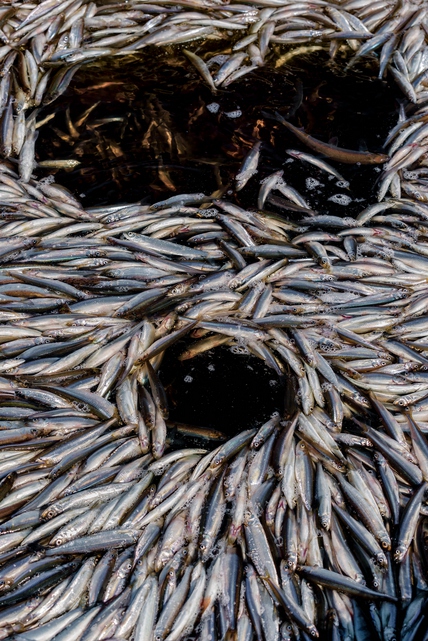
Antti J. Leinonen „Vendace Pareidolia“ (2024). 100 × 70 cm. Pigmentfoto, alumiiniumraam, muuseumiklaas. Tiraaž_ 5 + 2 AP_
It is precisely this long-term documentation that gives these photographs a meaning extending beyond the aesthetics of any single image. Leinonen records something that may change or disappear, and photography thereby becomes both a testimony to the present and material for a future historical memory. At the same time, he does not present this world as a neutral observer: his recognisable photographic style, his use of colour, and the humour running through the work all shape the way reality reaches the viewer.
With Vika Eksta, the question of documentary photography’s objectivity turns toward the photographer’s own past. The works exhibited at Foto Tallinn date from a time when she had only just begun in photography and was captivated by the Magnum photographers and the idea of capturing life as objectively as possible. She went to the funeral of her aunt Zoņa with a 35mm camera and black-and-white film, thinking, as she herself puts it, about how Cartier-Bresson would have seen the event.
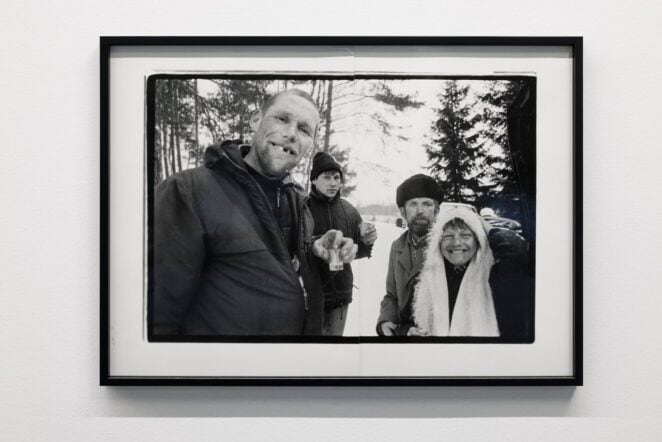
Vika Eksta. Funeral in Sloboda II (2025). 50 × 60 cm. Silver gelatin print. Edition_ 1_2 + AP
With the passing of years, however, both the artist and the meaning of these photographs have changed. Images once made to document the present as objectively as possible have become material through which to look back on both a family loss and the artist’s own former understanding of photography.
Jói Kjartans’s Huldufólk ties photography’s evidentiary function into something of a knot, using the documentary medium to search for the “hidden people” (huldufólk) known from Icelandic folklore — supernatural beings said to live in nature — that is, to capture something whose existence photography cannot confirm. Kjartans’s photographs can also be found in the Norwegian Journal of Photography, which features photographers working between traditional press photography and art photography.
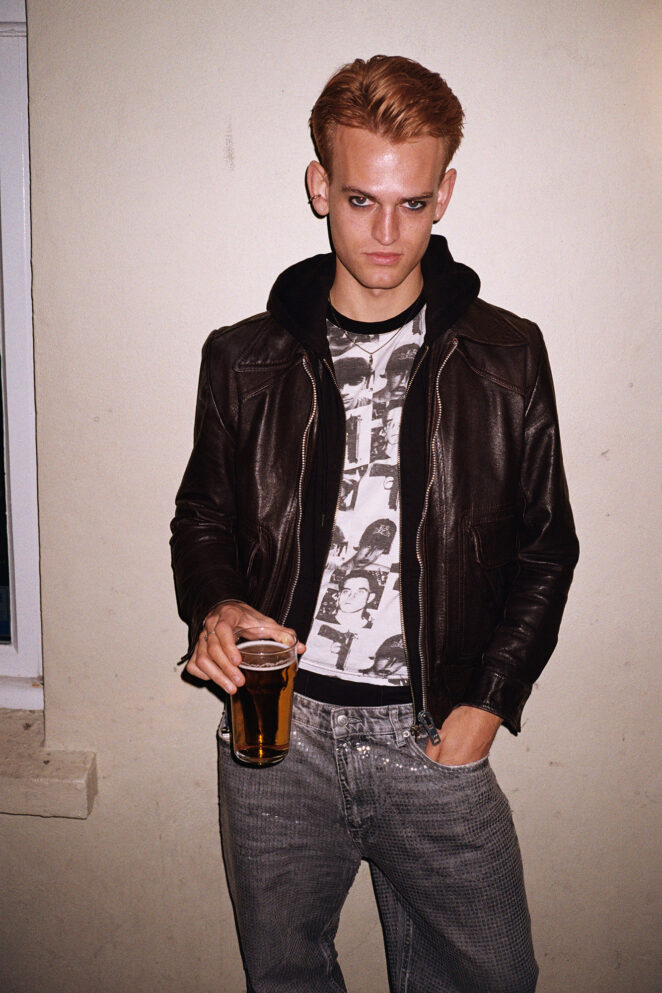
Jói Kjartans „Hidden People 02“ (2026). 50 × 70 cm_
In the practice of several Foto Tallinn participants, then, the aim is not to restore the boundary between the documentary and the constructed image, but to explore different ways in which photography relates to reality.
Naguel Rivero is an Argentine visual artist living in Paris, whose series “Nada Es Perfecto Aquí” (“Nothing Here Is Perfect”) points to the art of improvisation under conditions of scarcity. Using a hybrid methodology of documentary film and semi-fictional staging, Rivero documents the Argentine ethos — also fairly familiar to us from the Soviet era — of atamos con alambre (“we tie everything together with wire”), turning informal urban solutions into spontaneous sculptures. Here, reality and staging are not opposites. The artist’s intervention can instead amplify something already present in the observed environment, making it more visible.
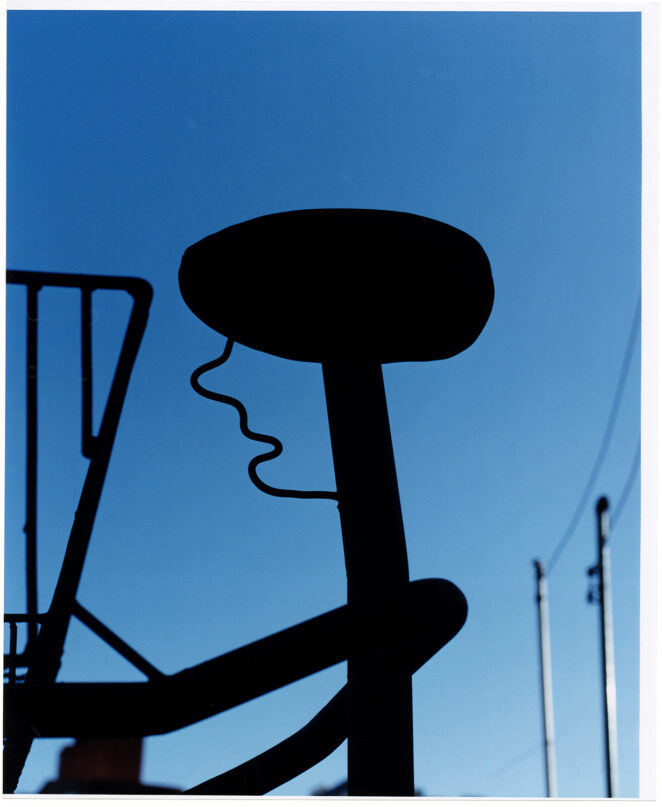
Naguel Rivero. From series N.E.P.A. Nada Es Perfecto Aquí (2025)
This year’s selection thus does not appear to seek a return to photography’s former “status of truth.” As with any good work of art more broadly, photography’s relationship is not to truth but rather to plausibility. Uncertainty itself is treated as a contemporary condition of the photographic image: who creates the picture, what reality it mediates, what has been staged within it, and on what basis the viewer decides what to believe at all. What matters is what the image is able to draw out of reality, what we might not otherwise notice without it, and what new knowledge, experience, or perspective it adds.
Being a Woman, and the Body
Being a woman, and the visual and cultural constructions formed around it, make up another strong axis in the Foto Tallinn selection. The question is not only how the female body is depicted in photography, but how being a woman is constructed through the body, who controls that image, and what happens when one of the strongest cultural symbols of being a woman is removed.
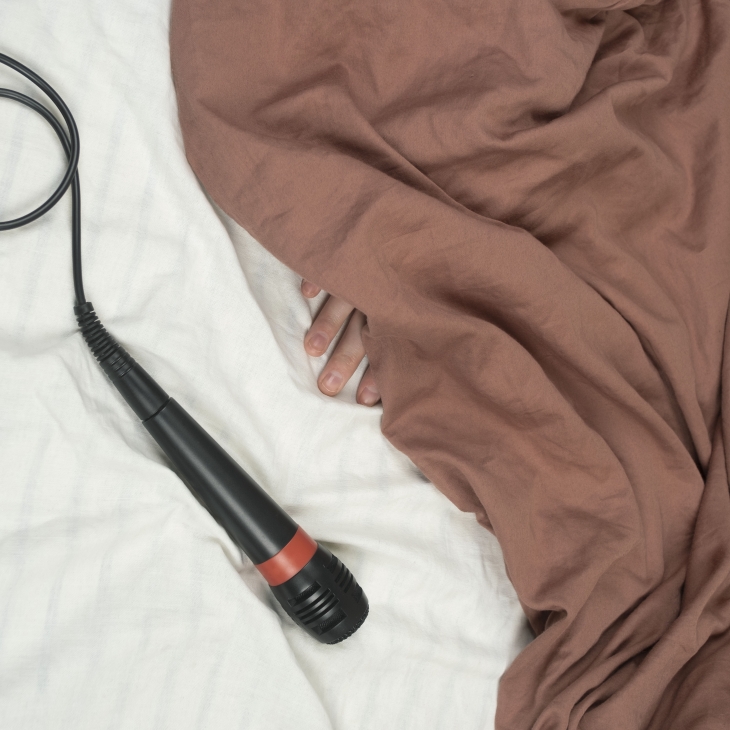
In Emma Sarpaniemi’s performative self-portraits, the construction of self-image is made public. The characters created through clothing, found objects, and accessories are at once imagined figures and parts of the artist’s own identity. Sarpaniemi often deliberately leaves the camera’s shutter release cable in the frame. The illusion is not concealed: both the act of image-making and the artist’s authorship and control over how her body appears to the viewer remain visible. Being a woman does not appear here as a single fixed identity, but as something that can be performed, constructed, and reshaped.
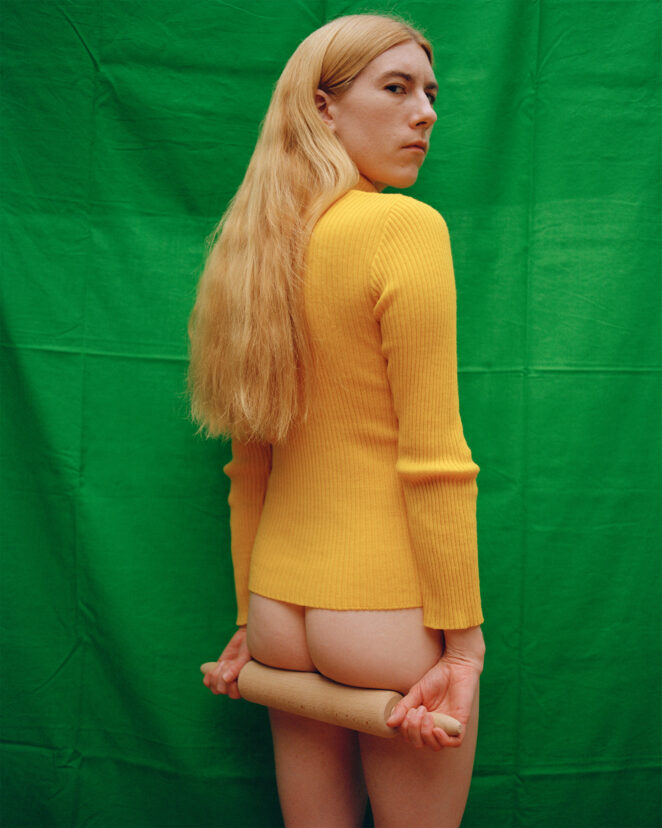
Emma Sarpaniemi. Kaulimella suoraksi (2024). 75 × 60 cm. Pigment print on dibond, framed. Edition_ 5 + 2 AP
Maria Kapajeva’s My Parts, Not sharpens the same question considerably. Before a preventive double mastectomy, the artist documented her breasts through photographs, prints, and casts. The project interweaves the female body, queer identity, medical necessity, and a very strong cultural image of breasts as a symbol of femininity. In Kapajeva’s own story, a contradiction arises in relation to her identity as a queer woman. The removal of the breasts becomes far more than a medical event: it opens up the question of how strongly we are accustomed to tying being a woman to a specific body, and what remains of that identity once one of its most culturally charged features disappears. Kapajeva, however, does not leave the lost body part only as a photographic memory. Since the operation, she has continued translating its form into clay, creating bell-shaped objects based on breast casts taken before the surgery. The body becomes an image, a trace, and finally a new material object.
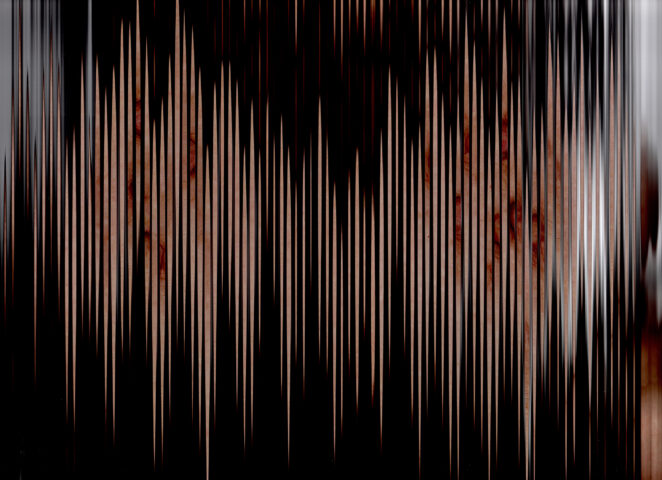
Maria Kapajeva. Parts of Me, Not (2025). 75 × 54 cm. Color pigment print on Hahnemühle Photo Rag Baryta paper, aluminum composite, Trulife museum acrylic. Edition of 5 + 1 AP
The Materiality of Photography
One of the clearest shifts in this year’s selection is photography’s movement from the flat image toward the physical object. How much photography must remain in such a work for us still to call it photographic art? This is not a new question, but in 2026 it has a new context. Our everyday visual environment has changed radically; the photograph is a flow — information moving from screen to screen, copyable, editable, and, increasingly, synthetically generated as well. It is precisely in this situation that part of photographic art appears to be moving in the opposite direction: back toward material. The photograph is no longer the endpoint of a work but material, or one stage in a longer process: the image is transferred onto porcelain or glass, printed on silk, joined with wood, concrete, or metal, worked by hand, or carried forward into sculpture and installation.
What matters here is not merely a change of support. When the image acquires surface, weight, texture, and spatial presence, the material itself begins to shape its meaning. At the same time, the speed of photography’s immediate capture and digital image circulation meets techniques that require time, physical labour, and often craft skill.
Johanna Adojaan transfers black-and-white photographs made in Jingdezhen onto semi-translucent porcelain plates. This creates a particularly telling temporal tension. The photographic image — a technology whose history spans less than two centuries, and whose digital form can today arise and spread within seconds — is placed onto porcelain, whose manufacturing tradition in China reaches back more than a thousand years. Jingdezhen itself has been one of the centres of Chinese porcelain production for centuries. The image is no longer only what is seen: the material’s history, its translucency, fragility, and the process of its making begin to intervene in its meaning.
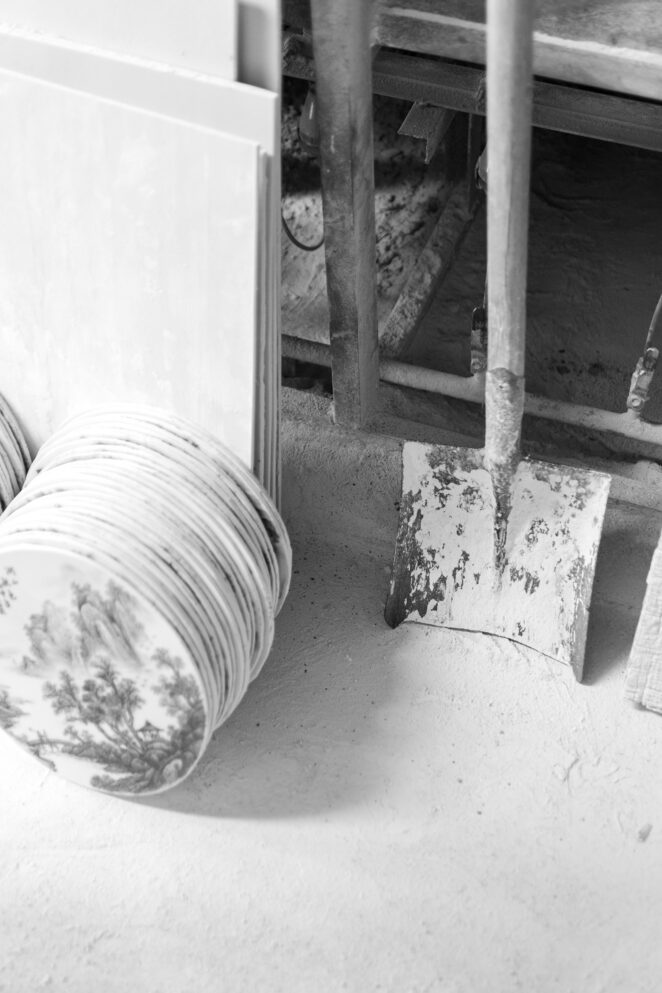
Johanna Adojaan. Bits #03 (2025). 18 × 11 cm. Photo transfer on porcelain, wooden shelf(1)
Ananya Tanttu’s Double Weave consists of sixteen photo-objects in which the photographic image has been given the form of a physical object. Weaving is the work’s conceptual starting point: Tanttu imagines it as a cycle of receiving and releasing — if the warp were consciousness and space, and the weft experience, then time would be the rhythm of the weaving.
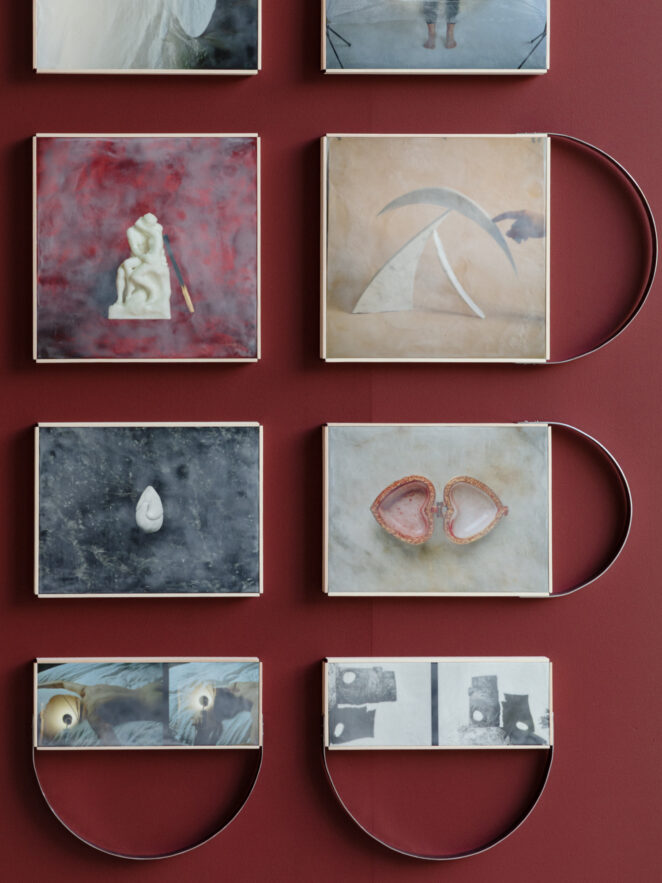
Ananya Tanttu. Venus is a hormonal planet (The Kiss) (2026). 56 × 82 (_56) × 4,5 cm. Archival inkjet print, dibond, beeswax, dammar resin, pine, steel. Edition_ 5 + 2 AP
Diana Luganski combines photography with sculptural techniques, including casting. The artist herself links mould-making to photographic logic — in both cases, an impression is taken of something that already exists. In her Sacer series, presented for the first time at Foto Tallinn, she combines photo prints with sculptures cast in bronze.
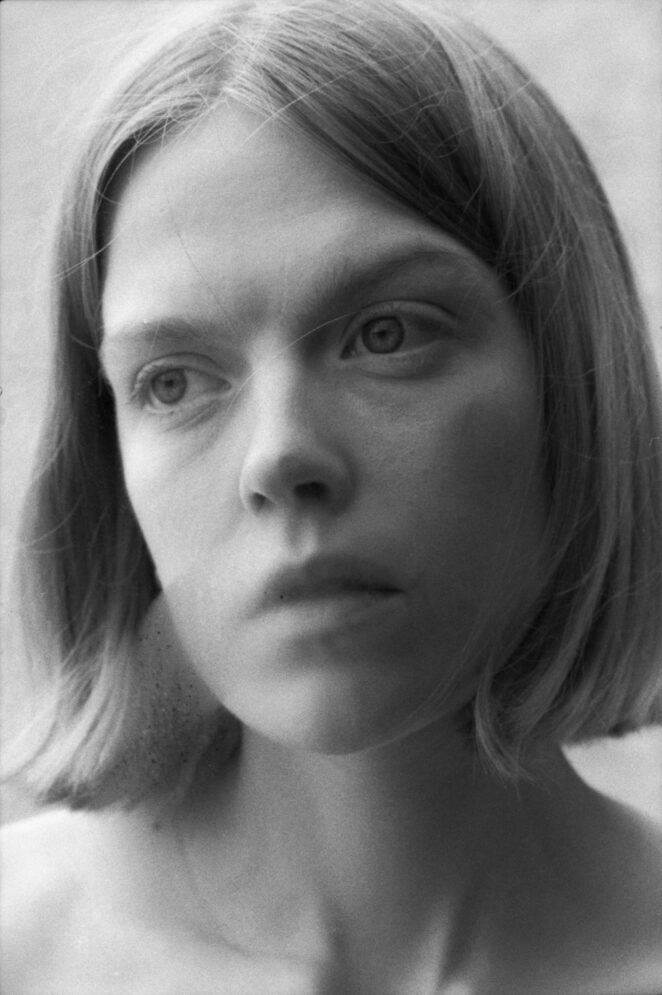
Diana Luganski „Hengittäjä“ (2025)
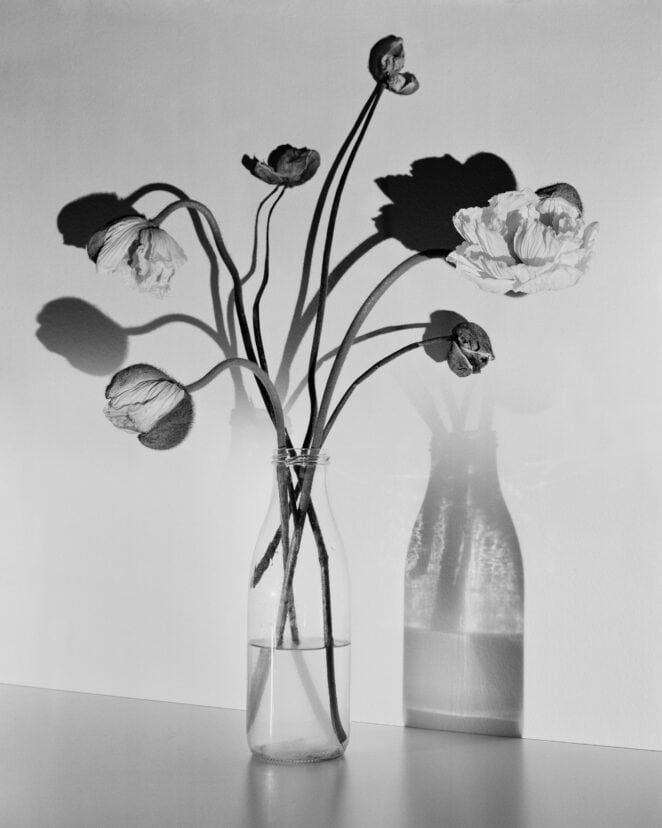
Diana Luganski „Hypnosis“ (2026)
Bob Bicknell-Knight starts from a world that has been constructed from the outset. His Altars series takes as its starting point clocks drawn from various video games. Images that begin as digital photographs are processed, printed on canvas, and overpainted with acrylic; they are surrounded by digitally modelled, 3D-printed frames coated in layers of concrete. In this way, the image moves from a virtual game space, through several technical and material stages, into a physical object. The motif of frozen clocks is likewise no accident: the artist uses them to examine video games’ fabricated and stretchable time, while the altar-like frames add meanings of belief, power, and control.
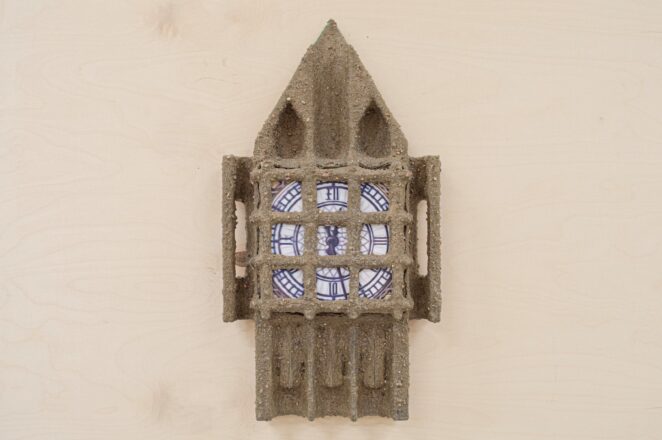
Bob Bicknell-Knight. Passage (2025). 43 × 23 × 6 cm. Printed ink and acrylic on canvas, pine wood, PLA, concrete, PVA, water, filler. Unique
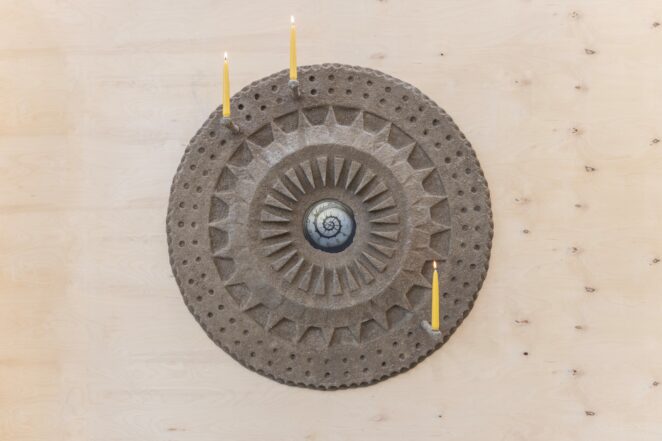
Bob Bicknell-Knight. Routine (2025). 105 × 105 × 10 cm. Printed ink and acrylic on canvas, pine wood, PLA, concrete, copper bolts, PVA, water, filler, beeswax, candle wicks. Unique
Here, the opposition between digital and material becomes especially interesting. The original image does not claim to document the real world; it comes from an already-constructed virtual world, yet the artist gives it an increasingly greater physical presence: ink, canvas, acrylic, 3D print, and concrete. Photography functions as one stage in a longer process, whose end result sits as much in the territory of painting and sculpture as in that of photography.
Alongside the speed of the digital image, the time required by material processes is brought in. Firing porcelain, silk-screen printing, glass, mould-making, or camera-less photographic processes once again turn the image into something with a production time, physical limits, and a specific location.
Tamošiūnaitė states this connection most directly. Screen Works begins with the unbroken digital image stream of surveillance cameras, from which she captures screenshots and translates them into screen prints on glass and paper. The artist sets a slow, hand-made process against the fleeting digital image from which the works originate. In this way, rapidly consumed and vanishing screen images become material surfaces. Here, two phenomena that at first seem separate — photography’s new materiality and the rise of slowness — begin to directly intersect.
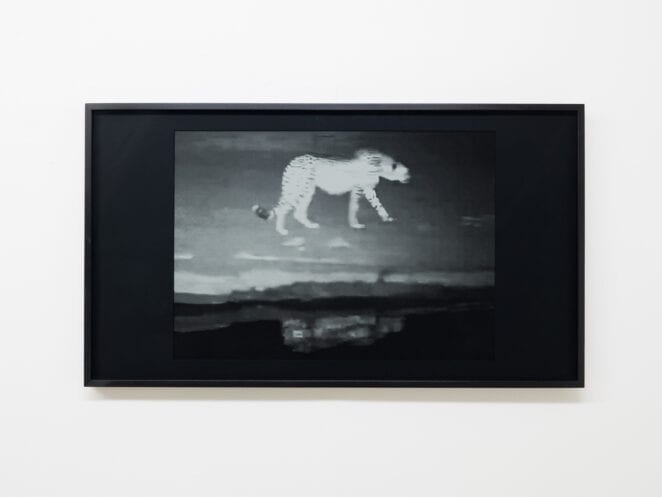
Gedvilė Tamošiūnaitė untitled (cheetah) (2026). 107 × 60 cm. Hand-pulled silkscreen print on archival paper, artist’s frame — black-lacquered beech wood, toned grey glass. Paper edition 1_4 + 1 AP
Slowness Has Become a Cultural Response to Acceleration
The rise of slowness is not confined to photographic art. Slow art, slow looking, slow curating, slow institutions, and, in the academic world, slow scholarship — across different fields, the same desire recurs: to restore duration, attention, and process in a situation where the pace of production and communication keeps increasing.
It would be easy to explain this through a digital attention crisis, but that overlooks the fact that speed is not merely an individual habit. It is also built into the institutions in which culture is produced.
Hartmut Rosa’s theory of social acceleration distinguishes between technological acceleration, the acceleration of social change, and the acceleration of the pace of life. Technology should, at least in theory, free up time: if the same activity can be done twice as fast, half of the previous time should be left over. In practice, however, gains in efficiency tend to increase the sheer volume of activity. We do not write the same number of letters faster; we send more messages. We do not arrive earlier using faster means; we simply move around more.
Rosa’s concept of dynamic stabilization turns this into a structural problem. According to him, modern institutions can maintain their position only through constant growth, innovation, and acceleration.
This is not hard to recognise in the art field. A more international programme, a new project, the next residency, a new partnership, more visitors, greater visibility, the next fair. Added to this is a layer of communication in which simply putting on an exhibition is no longer enough: the exhibition must produce press releases, interviews, videos, newsletters, and social media content, while competing at the same time with hundreds of other cultural events. Overabundance here is not a side effect of the system but the way the system keeps itself running.
This produces a strange situation: we do not necessarily accelerate in order to get somewhere. We accelerate in order not to fall behind.
The Art Fair Is an Almost Ideal Paradox for Slowness
Foto Tallinn is an almost ideal format for observing this contradiction, because an art fair brings two different temporal logics together in a single space.
The work of 45 artists is shown over three days. Visitors’ attention is divided among dozens of presentations; a gallery’s aim is to meet as many important people as possible; an artist needs visibility; an organiser needs an audience; a collector must compare works and make choices. The fair’s economic and social function depends, to a large extent, on people and information moving.
This does not make the art fair a bad format. On the contrary, a fair makes it possible to see an extraordinary amount in a short time and creates encounters that would not otherwise happen. But precisely for that reason, it exposes a contradiction that slow looking alone cannot resolve.
Tamošiūnaitė can turn a rapidly circulating screen image into an object that demands sustained looking, but that object reaches the viewer in an environment where dozens of other works are competing alongside it for attention. In this sense, the problem of slowness is not only a matter of the viewer’s self-discipline. The advice to “put your phone away and look longer” individualises a question whose causes are, in part, structural.
Who Can Afford Slowness?
Here, the idea of slowness also becomes politically more complicated. In her book In the Meantime: Temporality and Cultural Politics, Sarah Sharma criticises the universal narrative of an accelerating world. Her concept of power-chronography starts from the premise that people do not live within the same temporal regime, and that control over time is distributed unequally. One person’s ability to slow down may depend on another person’s obligation to be quickly available, mobile, or productive. The same question can be posed within art.
Long-term research requires time from the artist, but also the economic means to use that time. A curator can step away from the fast production cycle only if the institution’s funding and work organisation allow it. Nor is the audience’s ability to spend an entire afternoon in a museum universal.
Slowness, therefore, is not in itself yet resistance. Under certain conditions, it can instead become a cultural luxury good: a retreat, an exclusive experience, slow collecting, a long research residency — opportunities whose value lies, in part, precisely in the fact that time has become scarce in ordinary working life.
An important distinction between slow looking and a slow institution is that the former is relatively easy to add to an existing system. A museum can organise a programme in which a single work is viewed for twenty minutes, then continue the very next day at exactly the same production pace. The scarcity of attention to which practices of slowness respond has not arisen outside the art world. The art field produces that scarcity itself, too.
A slow institution, however, would require different decisions: fewer projects, longer working processes, less pressure to constantly produce something new, different funding models, and perhaps also giving up the assumption that an institution’s success must be demonstrated through constant growth.
For me, this is exactly the point where the Nida discourse on slowness and the Foto Tallinn selection meet. On one side is photography that seeks materiality, duration, and attention, and tries to restore weight to the image in an environment where images can be produced almost without limit. On the other side is the system for distributing that art, which depends on visibility, novelty, international circulation, and constant production.
Speed enables access, movement, the exchange of knowledge, and encounters; slowness, in turn, can become a privilege or a marketable lifestyle. Slowness can be resistance only if it is not turned into yet another product. If slow art means an exclusive retreat, VIP viewing, or a luxury for an audience that already has the most control over its own time, it may instead reproduce the very inequality it seeks to critique.
The most interesting question about slow photography, therefore, is not how long the making or viewing of a photograph takes. The question is whether photography can establish a different relationship to time in the midst of a system whose survival requires continuous acceleration — and whether the art field is ever willing to apply the demand for slowness to itself.
At Foto Tallinn, one might try slowness not as a principle but as an experience: letting a work hold you, and staying with it even when the eye already wants to move on. Perhaps slowness begins precisely where we stop searching for the next moment and give what is already there time to open up.
Sources
- Foto Tallinn https://fototallinn.ee/osalejad/
- Anne Fuchs — Precarious Times: Temporality and History in Modern German Culture, especially its treatment of slow photography / slow aesthetics.
- Hartmut Rosa — Social Acceleration: A New Theory of Modernity, and the concept of dynamic stabilization
- Sarah Sharma — In the Meantime: Temporality and Cultural Politics