
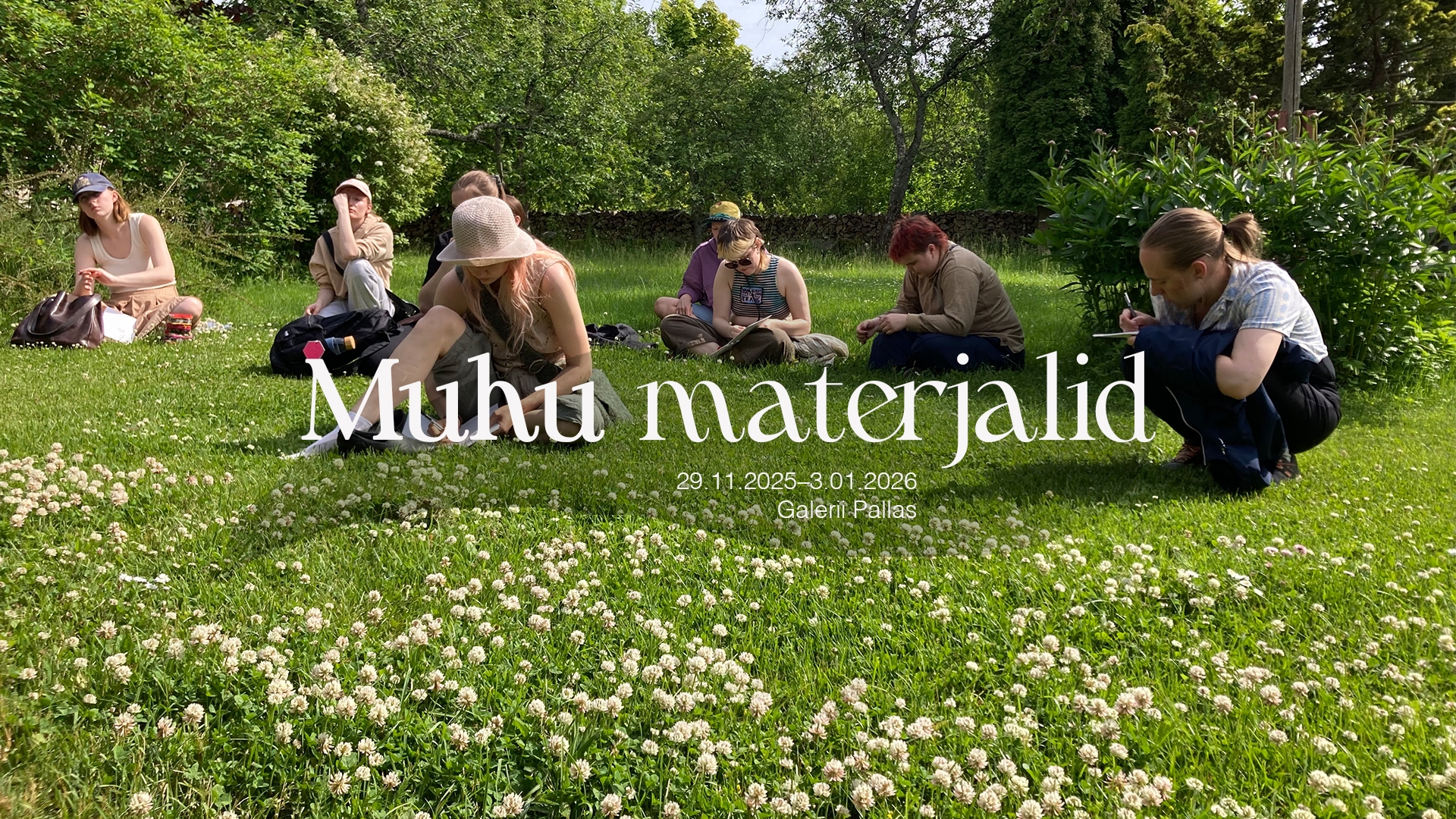
The exhibition features works by eleven students, inspired by the inhabitants of the island of Muhu, their stories, and materials collected on the island. At the heart of the project is a modest and caring attitude towards the surrounding environment and the people in it – an effort to notice, respect, and value what is already there, without bringing in anything superfluous.
The students worked from a “new-utopian” starting point: they imagined a world in which life outside Muhu no longer exists. In such a world, it is precisely artists and designers who must adapt quickly, get to know the local residents and their needs, and find ways to support the community with their skills and knowledge.
On the island, the students moved as attentive observers and gatherers. They collected materials from the shore, the forest, and around farmsteads – stones, wood, seaweed, textile remnants, forgotten objects, and production leftovers – aiming to interfere as little as possible with the existing environment. The origin and meaning of the materials were crucial: each fragment carries with it a piece of Muhu’s landscape, climate, and history.
Each work is created for a specific resident of the island – whether someone currently living on Muhu, a former islander, or an entirely fictional character. Through the artworks, intimate and personal relationships with place come to the fore: how materials speak about life on the island, how small everyday habits can become sources of creativity, and how design can act as a bridge between generations, between those who arrive and those who remain.
Course instructor and exhibition curator: Liisi Tamm.
Elective course instructors: Liisi Tamm, Mari-Triin Kirs, Kristjan Sisa.
Participants: Kristiina Bulgarin, Stefani Freitok, Helis Mosona, Reti Natalie Nael, Trine Ots, Leena Isabel Pizzolante, Mari Saffre, Grete Sallo, Katariina Torm, Johanna Tuisk, Darja Zaboronok.
Exhibition design: Trine Ots, Grete Sallo.


