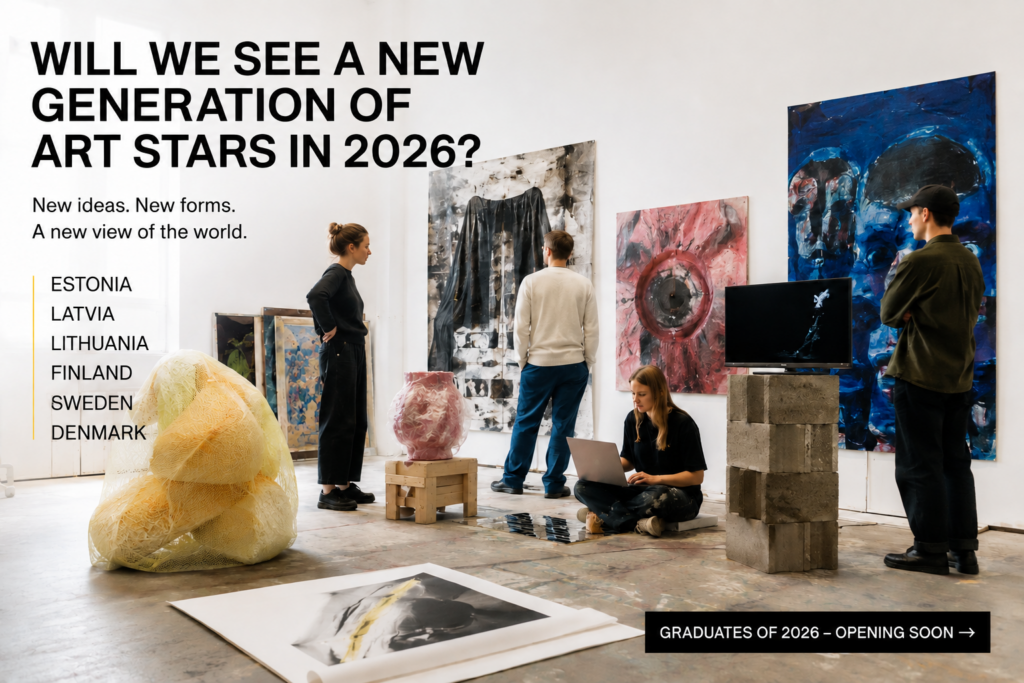
Who discovers the next art star—or perhaps even helps create one?
Identifying emerging talent has long been one of the great ambitions of the art world. Collectors hope to acquire works before an artist reaches major galleries and auction houses. Curators and museums seek to provide the first significant institutional platform for new voices. The question is not only who spots talent first, but how profoundly those early opportunities can influence an artist’s career.
Art history suggests that visibility rarely happens by chance. One of the best-known examples is Peggy Guggenheim, who recognised Jackson Pollock’s talent early on. Beyond collecting his work, she provided him with a regular income, organised his first solo exhibition and introduced him to the international art world. Pollock’s extraordinary talent was undeniable, but art historians widely regard Guggenheim’s support as one of the defining factors behind his international breakthrough.
A similar role was played in the 1990s by collector Charles Saatchi, whose early support of Damien Hirst, Tracey Emin, Sarah Lucas and other Young British Artists helped propel an entire generation onto the international stage. Likewise, legendary New York gallerist Leo Castelli created an early platform for artists such as Jasper Johns, Robert Rauschenberg, Roy Lichtenstein, Andy Warhol and Frank Stella, connecting them with museums, critics and collectors while their careers were still taking shape.
Even Jean-Michel Basquiat’s rise to international prominence was not solely the result of exceptional talent. Although Basquiat had already attracted attention in New York before meeting Andy Warhol, their collaboration opened the doors to influential collectors and institutions. His international reputation was further strengthened by Swiss gallerist Bruno Bischofberger, who represented Basquiat in Europe and initiated the celebrated collaborative works by Basquiat, Warhol and Francesco Clemente.
These stories demonstrate that art history is not created in artists’ studios alone. Talent remains fundamental, but equally important are those who recognise new artistic voices at the right moment and help bring them into museums, collections and, ultimately, art history.
Early recognition can shape an entire career
Academic research supports this view. A large-scale study published in Science, reconstructing the careers of nearly half a million artists, found a strong relationship between early institutional visibility and long-term success. Artists who entered prestigious galleries and museums early in their careers were significantly more likely to remain within the institutional art world and to achieve higher market values later on.
It is therefore hardly surprising that identifying emerging artists has become an international ecosystem in its own right. According to the Art Basel & UBS Survey of Global Collecting, more than half of high-net-worth collectors’ art spending is now directed towards emerging and early-career artists. The same study found that 55% of collectors consider art fairs their primary place for discovering new talent.
Interest in emerging artists extends well beyond collectors. Art fairs dedicate entire sections to young galleries and emerging artists, museums establish new programmes for early-career practitioners, and galleries actively seek out the next generation of talent. Liste Art Fair Basel, for example, has become one of the world’s leading platforms for young galleries and the artists they introduce. Kunsthalle Basel similarly defines its mission as bringing groundbreaking artistic positions to public attention long before they achieve broader international recognition.
Frieze’s recent interviews with a new generation of Asian collectors further highlight that collecting today is about more than ownership. Collector Soyoung Lee describes collecting as a way of preserving and making visible the artistic values of one’s own time while consciously supporting emerging local artists.
Discovering the next generation has become an institutional mission
The same development is increasingly visible across Northern Europe and the Baltic region.
London’s New Contemporaries has supported early-career artists since 1949. Its alumni include David Hockney, Antony Gormley, Anish Kapoor, Mona Hatoum, Tacita Dean, Paula Rego and Laure Prouvost. Today, the programme extends far beyond an annual exhibition, offering mentoring, residencies and professional development while collaborating with the Government Art Collection to acquire works by emerging artists each year.
In Finland, Young Artists at Helsinki Art Hall has been organised since 1939. The 2026 edition presented 26 artists under the age of 35, continuing nearly a century of introducing new artistic voices before their wider breakthrough.
Meanwhile, Generation at Amos Rex returned for its fourth edition in 2026, bringing together 50 young artists and collectives. In Tallinn, Fotografiska launched Emerging Artists: The Baltics & Finland, a new platform designed to increase the international visibility of emerging artists from the region.
At the same time, the exhibition SMS. WI-FI. OK. Baltic New Painting, presented at Viscosa Culture Factory on Hiiumaa, brings together more than one hundred painters from Estonia, Latvia and Lithuania representing a new generation of Baltic painting.
Although these initiatives differ in format, they all revolve around the same question:
Who deserves to be recognised before the art world has already made its choice?
NOBA maps an emerging generation before the selection begins
This is precisely where the Nordic & Baltic Young Artist Award differs from most international programmes.
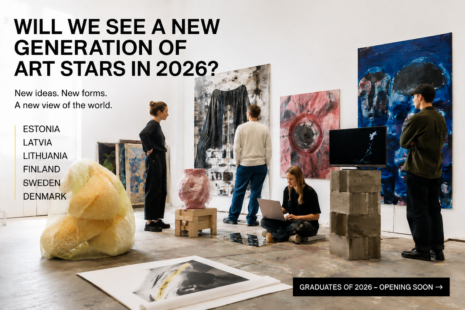
Where many emerging-art initiatives begin with a curator’s or jury’s selection, NOBA begins with an entire graduating generation. This year the platform brings together graduation projects from eight leading art academies across Estonia, Latvia, Lithuania, Finland and Sweden.
Rather than presenting a curated selection of presumed future stars, NOBA offers a rare opportunity to experience an entire artistic generation at the moment its members leave art school—before galleries, museums and the art market have determined which names will rise to prominence.
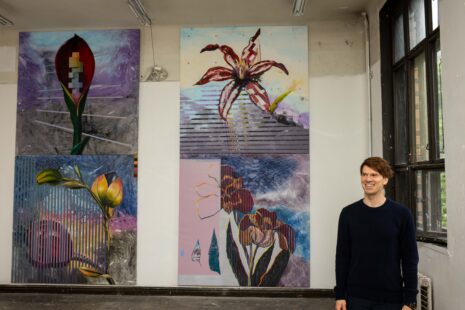
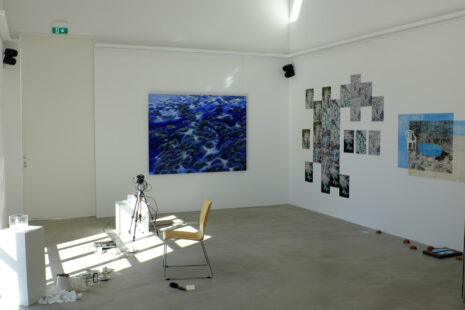
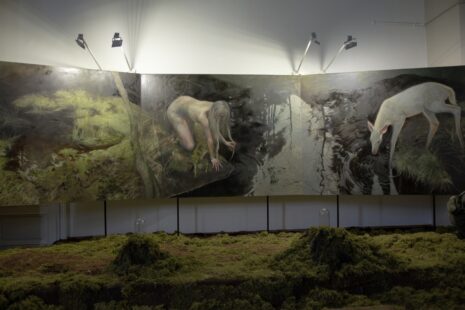
This is what makes the project unique. It reveals the themes, media and artistic concerns shaping a new generation while also offering insight into how young artists value their first professional works.
Many of the 2026 graduation projects are already available through NOBA. More importantly, however, they can still be discovered before the public vote this autumn and before the international jury announces its selections.
Could the artist you discover today be one whose work will be discussed in art history a decade from now?
Sources
- Art Basel – Why Collectors Are Embracing Emerging Artists (Art Basel & UBS Survey of Global Collecting 2024)
- Frieze – Young Asian Collectors (2025)
- Science / Quantifying Collection Lag in European Modern and Contemporary Art Museums (2023)
- New Contemporaries
- Helsinki Art Hall – Young Artists 2026
- Amos Rex – Generation 2026
- Fotografiska Tallinn – Emerging Artists: The Baltics & Finland
- Viscosa Culture Factory – SMS. WI-FI. OK. Baltic New Painting
- Nordic & Baltic Young Artist Award 2026 (NOBA)
- Solomon R. Guggenheim Museum – Peggy Guggenheim & Jackson Pollock
- TheArtStory – Peggy Guggenheim
- National Galleries of Scotland – Young British Artists
- Whitney Museum of American Art – Jean-Michel Basquiat
- History – Andy Warhol and Jean-Michel Basquiat