Lisafotod


The End of the Day, 2026
found fabric objects
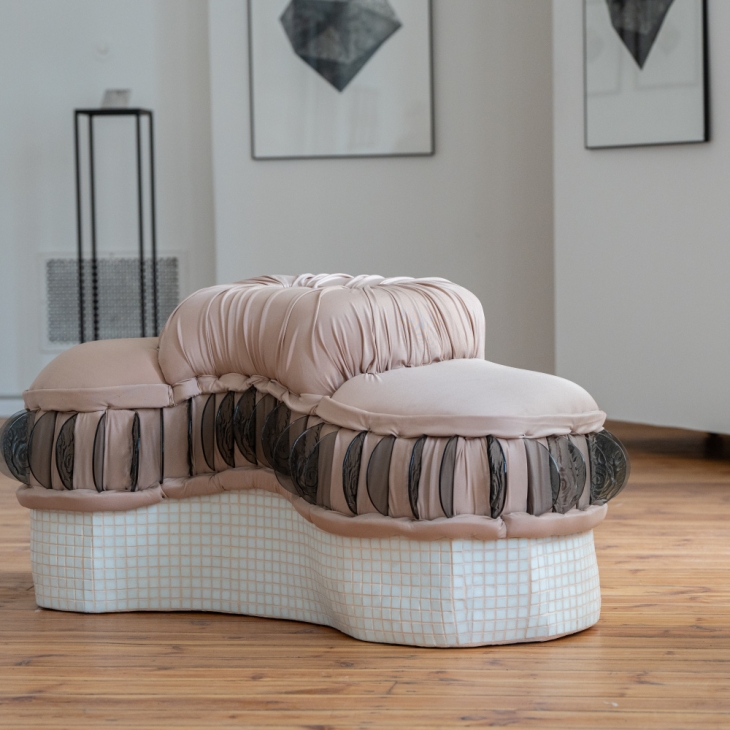
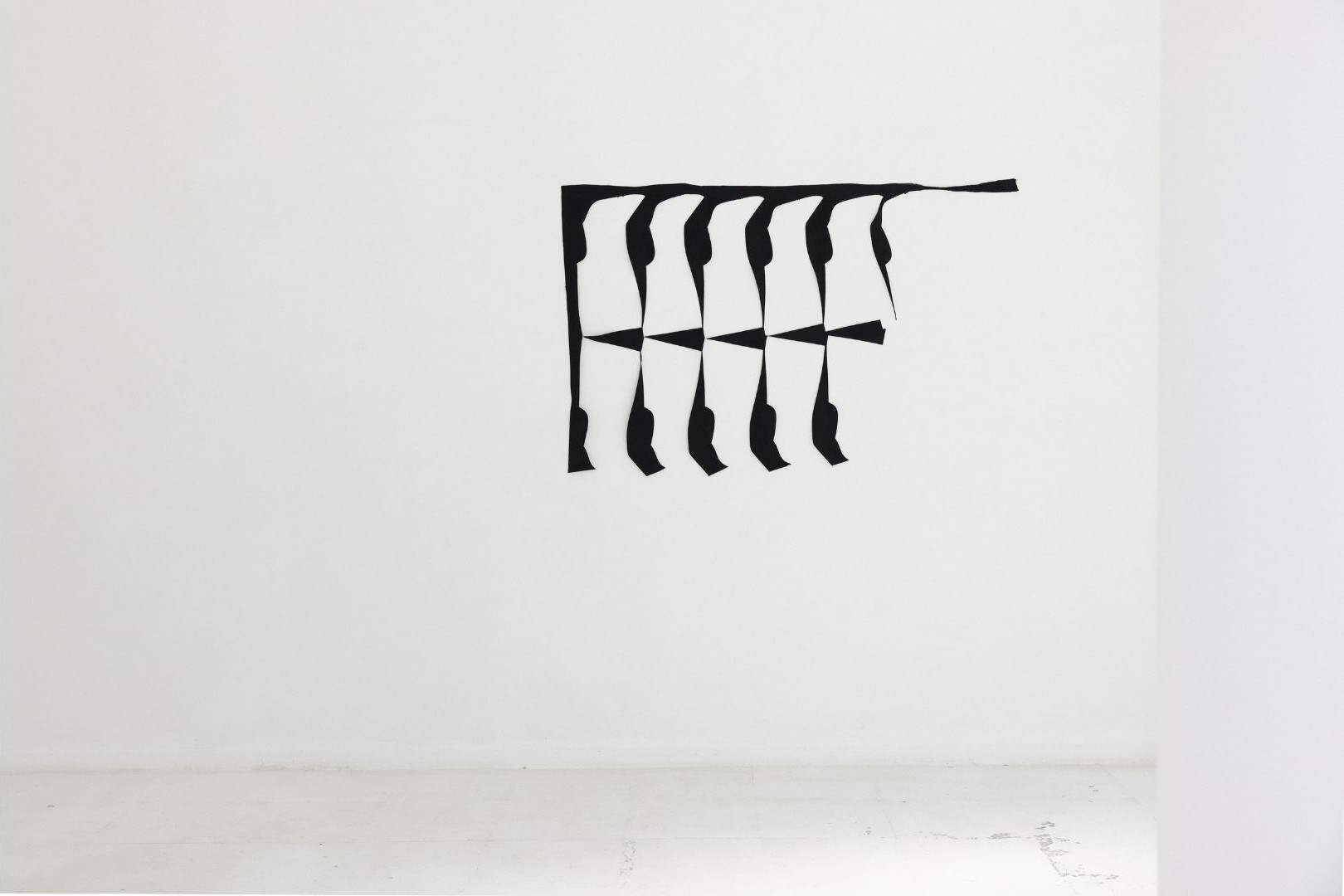
The series The End of the Day aims to redirect attention to often overlooked industrially produced materials. Through the use of textile industry remnants, work reflects on these materials beyond their working hours — what they are outside their primary function, how they transform once placed in another space, and what experiences of production and consumption they might evoke. In textile industry, most products are created for the body or in relation to it. The body determines the appearance of a garment and gives it form. Fabrics, closely enveloping the body, become almost like a second skin: they adapt, absorb sweat and odors, and retain memories of touch. Without the body, a garment becomes flat, losing its original function. Yet it begins to operate as an object that carries the memory of the body while no longer belonging to it. Similarly, unfamiliar fragmentary forms—like a mirror hanging in a fitting room—suggest parts of the human body, even though they have never physically touched it. Industrial materials surround our everyday choices and actions. Yet offcuts that have acquired neither commercial nor functional value exist as shadows of the industry. Removed from the cycle of recycling and placed in a different context, these materials are given the opportunity to be seen. Positioned, seemingly, on the other side of the display case, the offcuts and the absences they expose can reveal more about industrial processes than the finished garment itself. The End of the Day refers both to a moment in time and to industrial production. At the beginning of the twentieth century, the first fully synthetic plastic, Bakelite, was invented. Bakelite jewelry remains highly collectible today, and among its most sought-after varieties are the color combinations known as The End of the Day. These pieces were created by mixing together the pigments left over at the end of a day’s production. Paradoxically, what began as an economical way of saving material and making use of industrial leftovers is now valued as something unique and highly desirable. The artwork explores the existence of materials produced through industrial manufacturing, the traces of consumption they embody, and the blinding glare of store lights. They examine the tension between use and non-function, permanence and transience. The series The End of The Day was presented as part of the Vilnius Academy of Arts’ graduation show.
Soovitame ka neid teoseid