Price: €1500

(32) items in your cart


Juha Metso (Finland) photo project LOST ISLANDS at the Museum of New Art 07.11.2026-10.01.2027 Videos and photographs from the outer islands of the Gulf of Finland
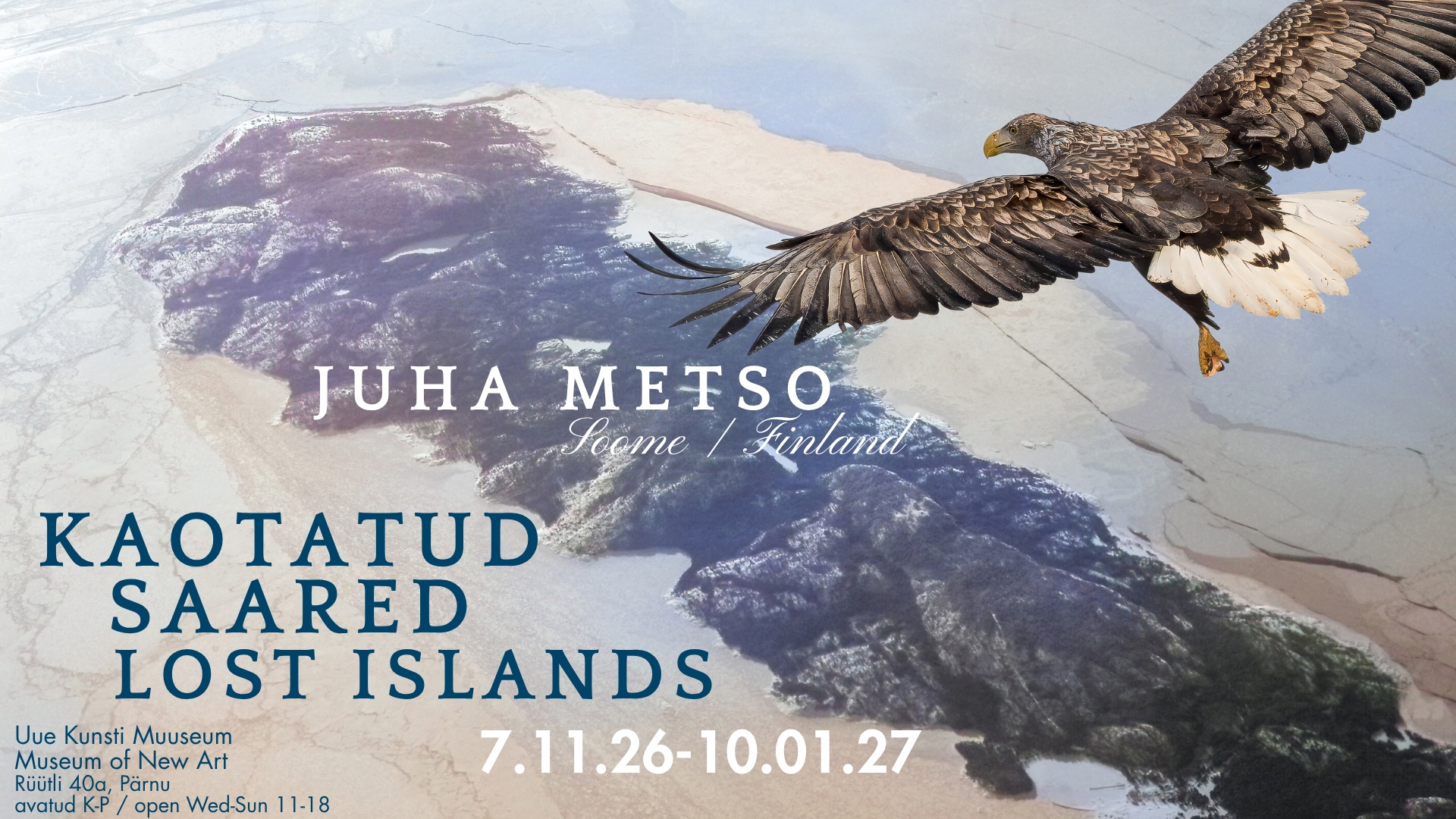
In the eastern part of the Gulf of Finland lie four old Finnish islands: Suursaari, Tütarsaari, Lavansaari and Seiskari.
The islands, Suursaar in particular, have taken on topical significance, as Russia’s war of aggression in Ukraine has also heightened tensions in the Baltic Sea.
The islands, which belong to Russia, can no longer be visited.
The exhibition contains unique photographic and video material about the islands lost to the Soviet Union in the Winter War, their nature and present-day inhabitants, and describes the traces that the Finns once left in these places.
Photographer Juha Metso visited Suursaar seven times between 1999 and 2019, and the other outer islands once.
Their photographs have preserved what remains on the islands for future generations to see.
“Our aim is to bring the old Finnish islands back into the consciousness of Finns and Estonians,” says the exhibition’s curator Marjo Näkki.
The exhibition LOST ISLANDS presents unique photographic and video material.
The short films feature islanders and their descendants. The photo collages include old archive photographs.
The result is a unique and dramatic exhibition that tells the story of the islands and, above all, of longing.
Stories and memories connect people with their roots. Above it all soars the white-tailed eagle, a central part of the exhibition.
“The white-tailed eagle symbolises continuity. Nature wins in the end, regardless of who is in power,” says photographer Juha Metso.
Even before the wars, a Finnish archipelago culture flourished on the islands. People made their living from the sea. The islanders engaged in friendship trade with Estonians.
Suursaar was a popular tourist destination, visited in summer by artists and writers as well. Shortly before the Winter War, the civilian population was evacuated from the islands. The evacuation became permanent when Finland lost the islands to the Soviet Union.
Art historian Mai Levin introduces at the exhibition Estonian artists who have drawn inspiration from Suursaar.
In the summer of 1818, Carl Friedrich von Kügelgen (1772–1832) captured the Finnish landscape of rocks, forests and lakes in his sepia-toned drawings.
Professor Voldemar Vaga rightly regarded August Matthias Hagen (1794 – 1878) as the discoverer of Suursaar’s powerful nature. For all their careful detail, Hagen’s drawings are lively and picturesque.
Günther Reindorff (1889–1974) was a unique artist who, as Art Nouveau matured, developed from it a lively and distinctive style of his own. His sense of style is a delight both in studies conveying the keenness of his observation of nature and in large, finely finished drawings – enchanting visions of landscape. One of these is a work entitled Sibelius’s Finlandia, which may be regarded as a graphic counterpart to Jean Sibelius’s symphonic poem.
The exhibition consists of videos in which you can hear the memories of people who lived on the islands, as well as archive material from Finland and Estonia. Juha Metso’s photographs of Suursaar are also included.
The exhibition also features a selection of works by Estonian artists on the theme of Suursaar.
With thanks to: Cultural Endowment of Estonia, City of Pärnu, Art Museum of Estonia, Estonian Maritime Museum.
Galerii nimi: Museum of New Art
Address: Rüütli 40a, Pärnu, Pärnu County, Estonia
Opening hours: Wed-Sun 11:00 - 18:00
Open: 07.11.2026 — 10.01.2027
Types of art: Photography, Video
Address: Rüütli 40a, Pärnu, Pärnu County, Estonia
Opening hours: Wed-Sun 11:00 - 18:00
Ticket info: 10.- / 6.-
Open: 07.11.2026 — 10.01.2027


