Price: €800

(4) items in your cart
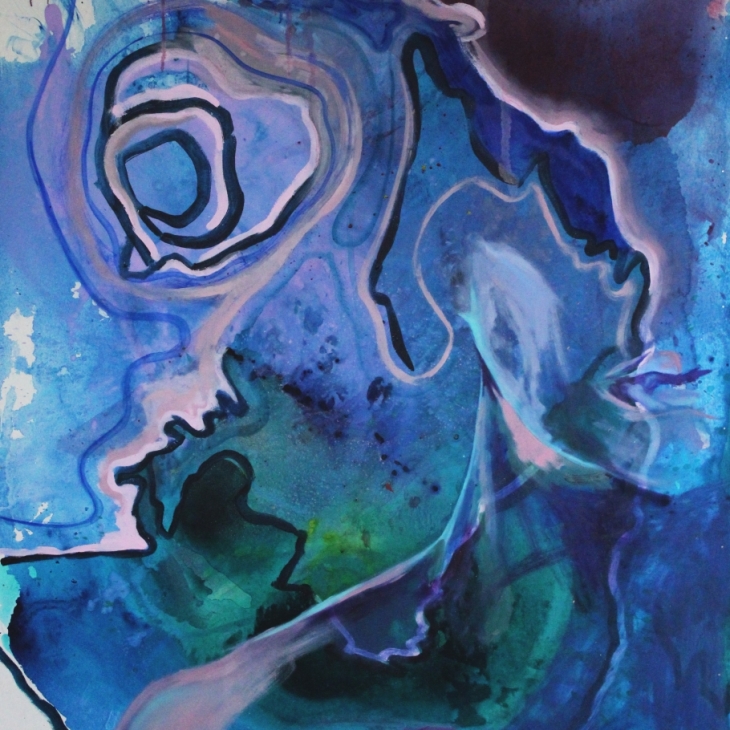

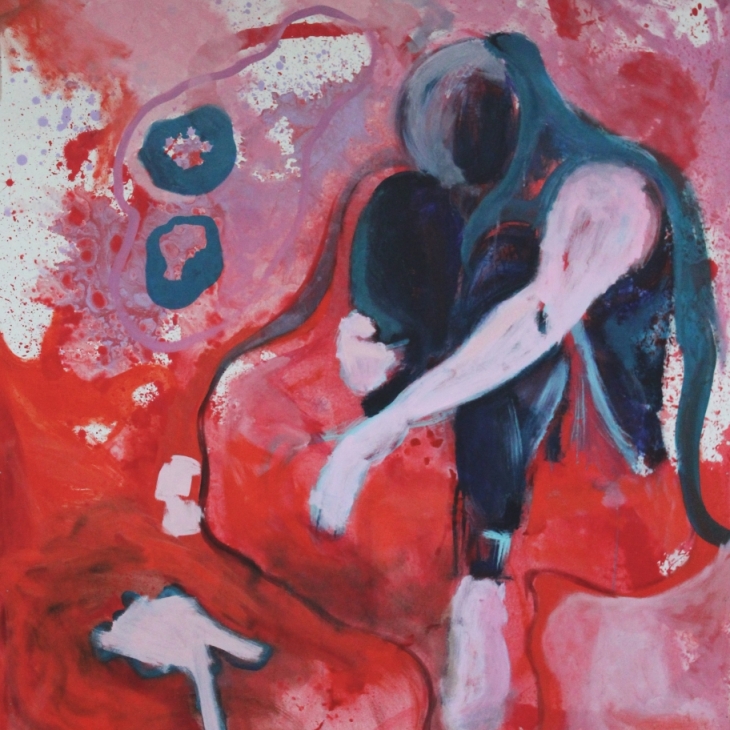
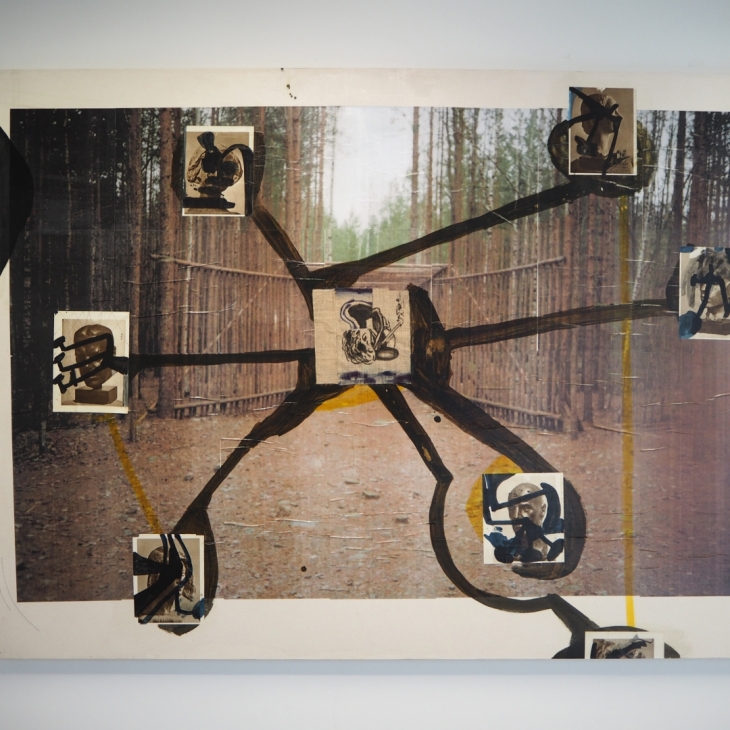
The artist invites us into the forest’s depths: to hide from anxiety, to recall the fear of the night forest, to frighten ourselves a little, to grieve, and to find calm at the same time.
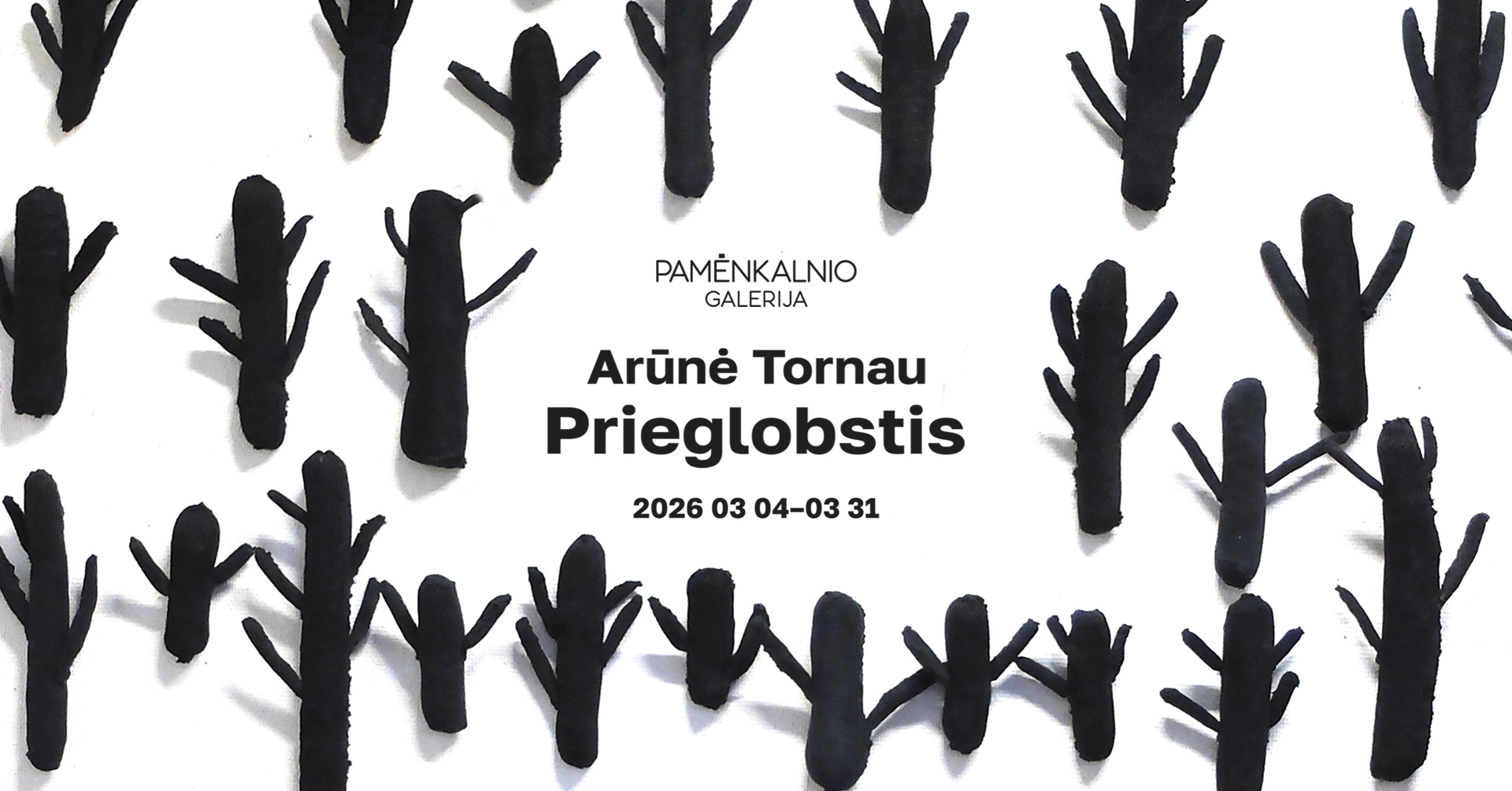
Curator Aistė Kisarauskaitė describes the exhibition as part of Arūnė Tornau’s ongoing journey into the forest. Time and again, in different ways, she invites us to observe the smallest tree-dwelling parasites – aphids, woodworms, moths, ticks (the exhibition Foreign Bodies, 2022); to immerse ourselves in the shadows of dense woodland and feel the slow cycles of nature (The End Is the Beginning, 2018); to wade into marshes and hear the crackle of dried branches underfoot.
In her works created between 2024 and 2026, the artist once again turns to processes of erosion and decay – processes that create the conditions for new life. At the same time, she painfully confronts the destructive force of human activity, as vast forest areas are brutally cut down. The war rumbling not far from our country is also a brutal erosion, a destructive force that, tragically, will never become fertile ground for new life. Explosions burn forests to the ground, and there is no defense against them – only terrible weapons.
For us – the last pagans of Europe, who have preserved so many signs of the ancient pre-Indo-European culture studied by Marija Gimbutas – the forest holds extraordinary meaning. Within it we can still sense the spirit of sacred groves; perhaps fairies and witches still dwell there, and Vėlinas sits at the forest’s edge. In the woods, Crusader soldiers were once led astray and destroyed; centuries later, partisans found refuge there. Since ancient times, the forest has embodied defence, danger, and safety all at once. Many of us, as children, built “bases” in nature – small shelters of branches, makeshift hideouts, burrows near home. It is no coincidence that not only Lithuanians use the image of a rabbit hole to describe escape. The forest remains our psychological and living rabbit hole – the very ground upon which Lithuanian sensibility rests.
As the snow slowly melts and last year’s decayed vegetation reemerges – soon to become nourishment for new shoots – the artist invites us into the forest’s depths: to hide from anxiety, to recall the fear of the night forest, to frighten ourselves a little, to grieve, and to find calm at the same time.
As Tornau reflects: “In these restless times, we live in daily fear of hearing bad news about war-ravaged Ukraine – God forbid, about Lithuania as well. Somewhere in the distance lingers the terrifying struggle between Iran’s regime and a nation striving for freedom. Existential questions arise. Why? For what purpose? What is the meaning?
At times, the constant human anxiety, fatigue, and sense of absurdity subside – but only temporarily. We long to hide from the tormenting uncertainty, the meaninglessness, the helplessness of being unable to change anything. We yearn for a safe refuge, where life’s rhythm is familiar and clear, independent of global cataclysms. That is why in my work I keep returning to my beloved motifs – nature and the forest – where I feel safe.
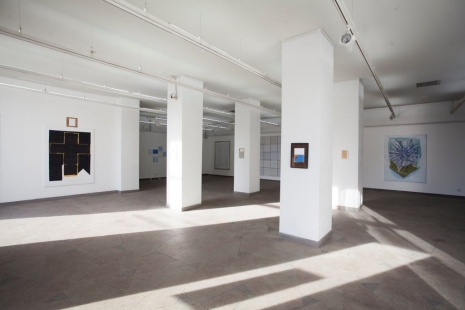
In this exhibition, recent textile objects are combined with painting. The agitated vertical cuts of a knife or palette knife across the surface of the canvas seem like gestures of struggle against an invisible enemy – a futile attempt to destroy evil and reveal an unseen painterly surface beneath, where another world lies hidden.”
Curator: Aistė Kisarauskaitė.
Organizer: Pamėnkalnio Gallery.
Financed by: Lithuanian Council for Culture, Lithuanian Artists’ Association.
Galerii nimi: Pamėnkalnio Gallery
Address: 1 Pamėnkalnio St, LT-01116 Vilnius
Opening hours: Tue-Fri 11:00 - 19:00 Sat 11:00 - 16:00
Open: 04.03.2026 — 31.03.2026
Types of art: Painting, Installation
Address: 1 Pamėnkalnio St, LT-01116 Vilnius
Opening hours: Tue-Fri 11:00 - 19:00 Sat 11:00 - 16:00
Ticket info: Free
Open: 04.03.2026 — 31.03.2026