Price: €770

(3) items in your cart


dry pastels on canvas
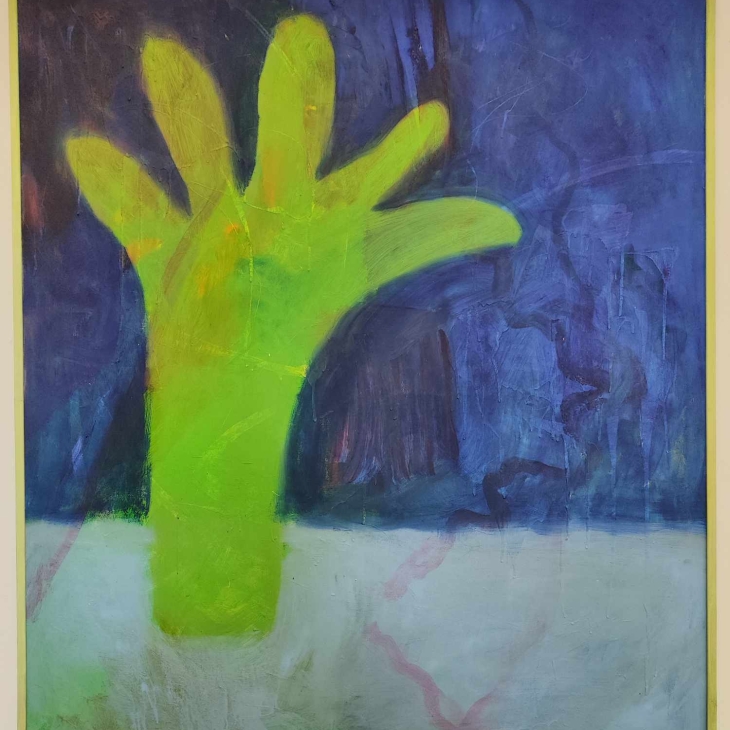
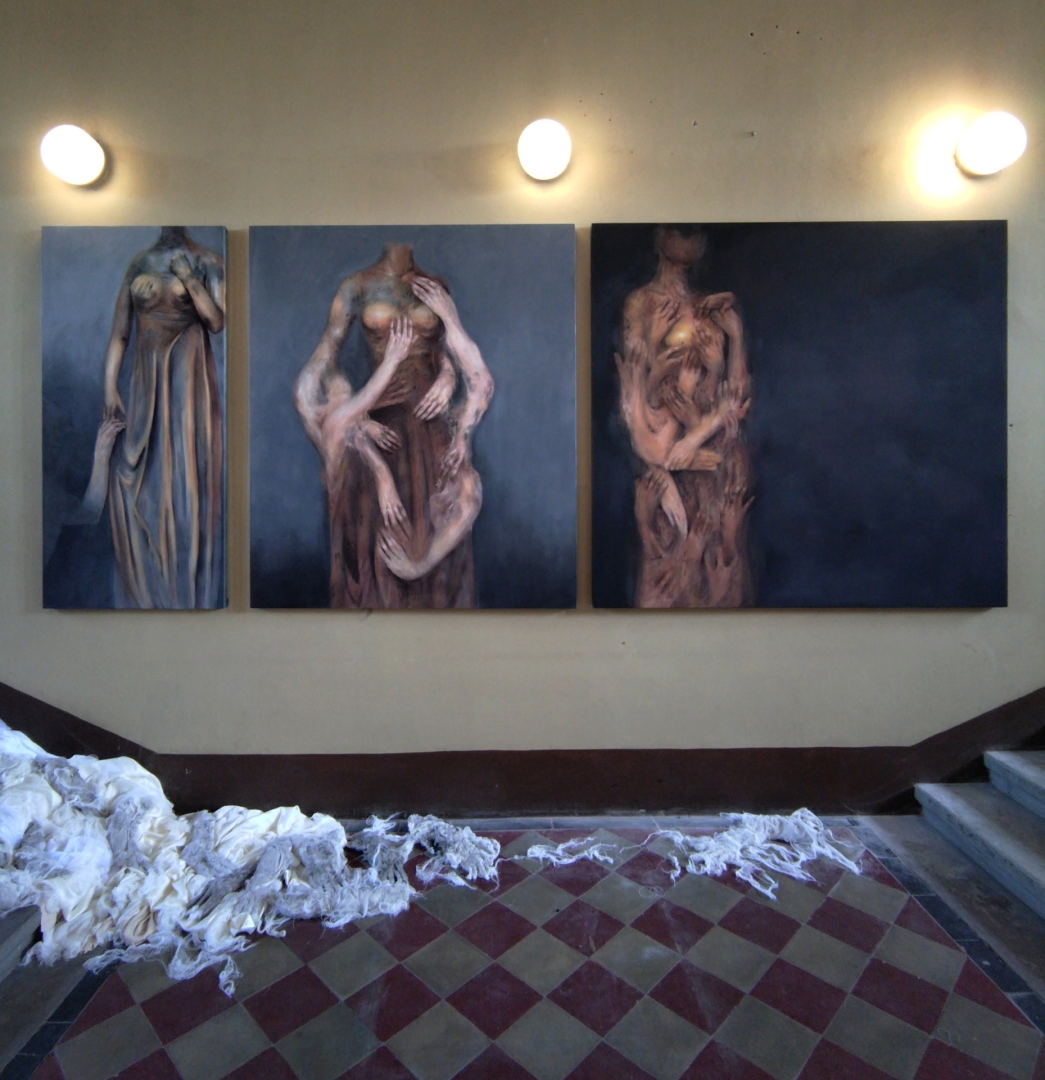
The series of works explores the boundary between the representation of a person and the person behind it. Inspired by Shakespeare’s statue of Juliet in Verona, whose bronze surface has been polished to a golden hue as a result of human touch. The work addresses the motifs of touch from a feminist perspective. The main focus is on depictions of female figures whose body parts are systematically physically touched until the metal changes color. The aim of the work is to provoke reflection on social norms and the impact of touch. The first work is the most realistic and least warped with the emphasis on the hand. The second work shows the statue merging with those touching it. Its’ form is covered in black fingerprints. The hands are rendered in a flesh tone and are minimalist in style, yet they are beginning to distort. The statue itself also begins to lose its shape; hands clasp it and begin to fuse with the statue’s form. In the third work, the statue has largely lost its original form. It has the appearance of polished bronze. Its surface is inseparable from the touch; the hands appear to have melted into it. The fingertips are bright yellow, resembling the most highly polished parts of the statue. The hands themselves have taken on the bronze hue, having largely lost their natural flesh color. Touching a sculpture’s chest, taking a photo while doing so, and laughing afterwards is a different experience from gently stroking the nose of a dog sculpture in passing. To a large extent, the moment is also defined by the statue’s wear and tear; the polished sheen on the statue’s body acts as an invitation and legitimizes the act. Rubbing bronze until it gleams like gold requires thousands of touches. It is a process of immense repetition, and through this, the act of touching becomes acceptable. Repetition is legitimization. Legitimization is normalization.